Slow travel / An essay by Elena Voss
The quiet art of getting lost.
A journey becomes something else when we stop asking what comes next.
Lumen · Volume 08 · Approximately 5 minutes
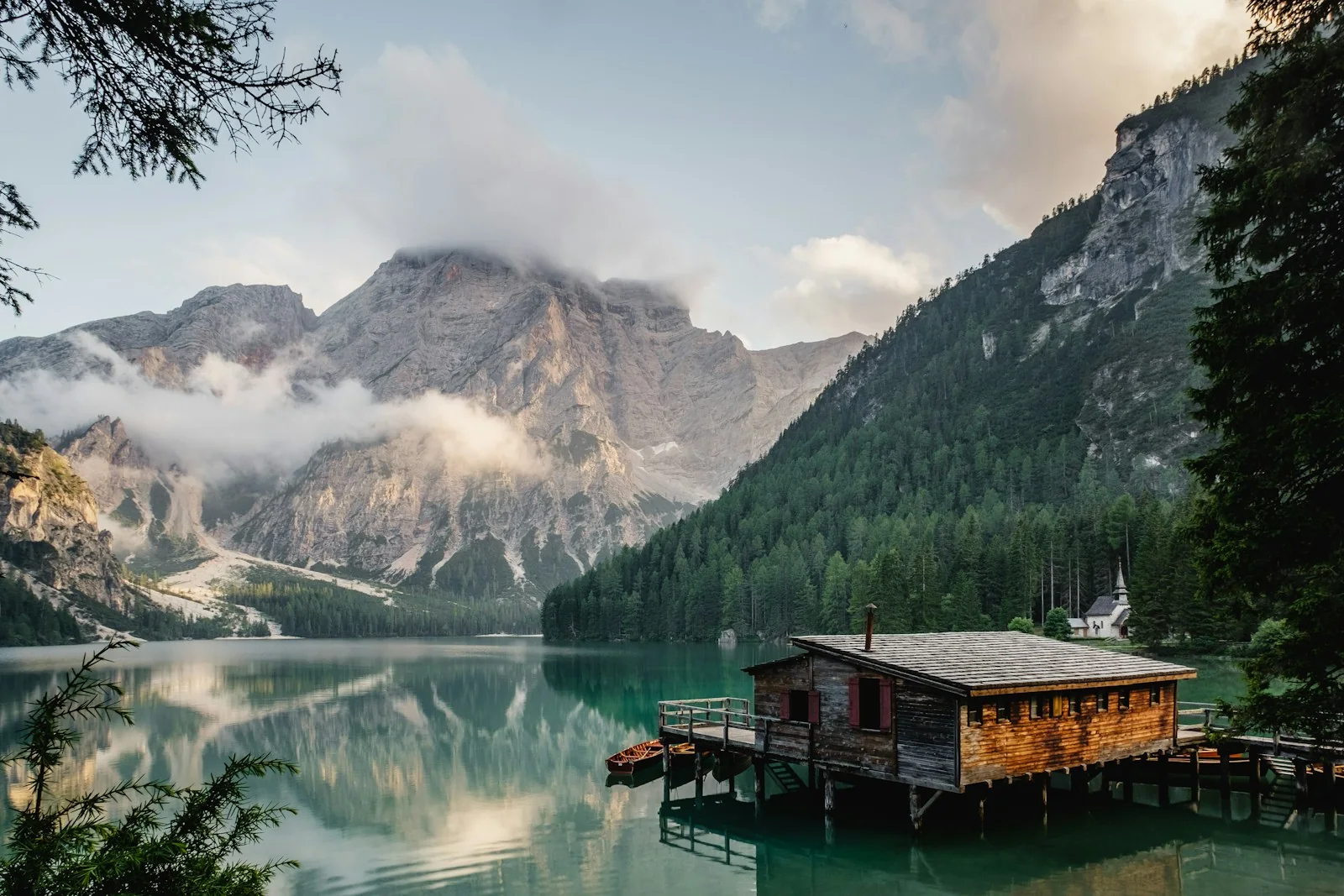
By the time the lake came into view, we were an hour behind a schedule that no longer seemed to matter. The road had narrowed to a path. The path had softened into grass. Across the water, a single tree stood so perfectly still that its reflection looked more solid than the tree itself.
There was nothing to do there. No ticket to buy, no sign to read, no carefully positioned bench. We sat on our coats and watched a small cloud work its way across the opposite slope. After a while, someone took out a camera, then put it away.
It is a peculiar thing, arriving somewhere you had not intended to go. The usual questions fall away. Is this the right place? Have we seen enough? Where should we be next? For once, the place does not need to justify the effort of reaching it. It is simply where you are.
The trouble with knowing.
We have become very good at travelling before we leave. We can walk a street on a screen, compare its cafés, inspect the view from a hotel window. We arrive carrying a picture of the place, and much of our time is spent checking the real thing against it.
There is comfort in this. A little preparation can open doors, make a difficult journey possible, or help us meet a place with greater care. But there is a point at which preparation becomes a script. We start to recognise things instead of seeing them.
“The most memorable part of a journey is often the part we could not have planned.”
The alternative is not carelessness. It is leaving a little space around what we know. An afternoon without a reservation. A turn down a street because of the light. Enough time to ask a question and listen to the whole answer.
A different kind of souvenir.
On our second morning, we returned to the same bakery. The woman behind the counter remembered that we had ordered badly the day before and gently suggested something else. We ate it standing in a patch of sun beside the door. A delivery driver stopped to talk. We understood perhaps one word in ten.
Nothing about this would have made a useful recommendation. There was no secret to share, no extraordinary discovery. Yet months later, it is the part I can still feel most clearly: the warmth of the paper bag, the scrape of a chair inside, the unhurried generosity of a stranger.
Perhaps attention is a kind of souvenir. Unlike the objects we bring home, it does not depend on the place remaining exactly as it was. It changes how we look at the next place, and the next ordinary morning. The unfamiliar teaches us how to be present in the familiar.
Leave a little room.
Back at the lake, the cloud finally reached the ridge. A breeze broke the reflection into a thousand small pieces. The whole composition we had been admiring disappeared, and something less perfect, more alive, took its place.
We stayed longer than we meant to. Not because we had found a better destination, but because we had briefly stopped needing one. There would still be trains to catch and routes to follow. There would still be a way home.
For now, the water was moving. The tree was just a tree. And there was more than enough to see.